
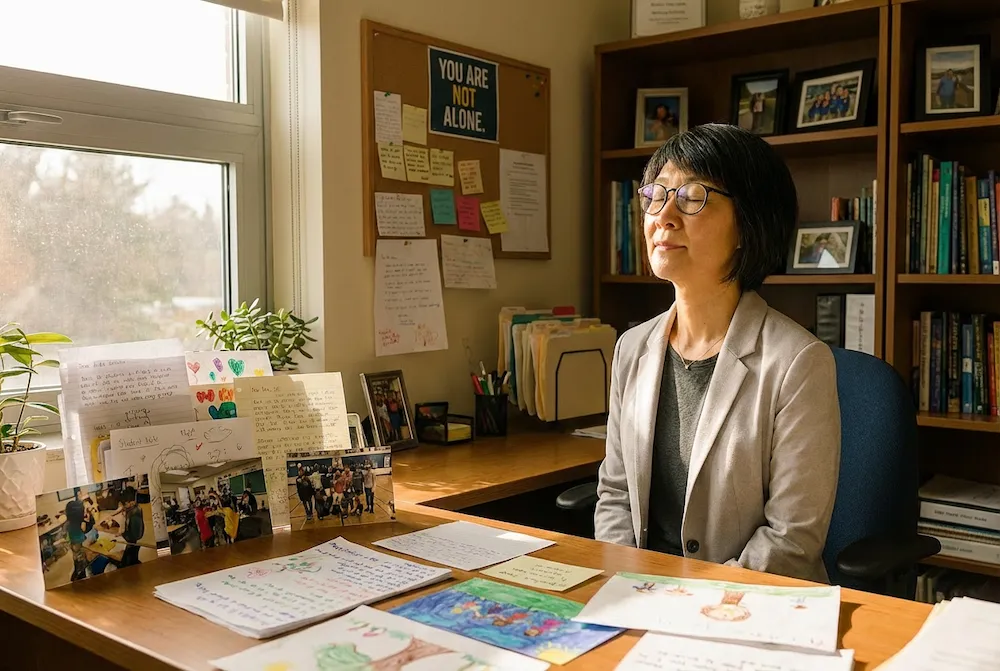
You Are Not Behind, Failing, or Alone
Right now, sit back for a second and ask yourself why you chose this profession.
It was probably not the paperwork, testing coordination, college prep, schedule frenzy or constant crisis response.
Maybe it was the moment when a student sat up a little straighter because you spoke to them as capable when no one else had the time.
The moment when a small shift, a different question, a quieter tone, a pause instead of a consequence, changed the trajectory of a child everyone else had already given up on.
The moment when you realized that one conversation, handled with care and respect, could do more than a dozen referrals ever could.
I want you to know something else too.
You matter, to students who don’t trust adults but somehow trust you.
You matter, to teachers who come to your door because you help them breathe again.
You matter, to parents who feel lost and are holding onto hope by a thread.
And here’s the part I need you to hear clearly...
You are not behind.
You are not failing.
You are not alone.
I email you every Monday and often during the week when I want to share ideas that I really feel honors your time, your energy, and your expertise. A way that helps conversations move forward instead of wearing you down.
You don’t have to do more to make a difference.
You just need permission to work differently.
Before this week is over, I’d like you to try one small thing.
Choose one student.
Not the easiest. Not the most challenging. Just one who tends to leave you feeling stuck when she leaves your office.
Call the student in again this week and ask just one question...
“Suppose things were a little better by the end of this week what would you notice first?”
Then listen.
Really listen.
You may hear “I don’t know.”
Don’t believe them!
Hang in there and ask it a little different, with the same point…what will be happening when things get better.
Don’t quit until you get an answer.
If they answer about what they don’t want…that’s cool. Come back with: “What do you want instead?”
If they still don’t know, let them go to class with an assignment: “think about what you do want and we will talk in a day or so.”
That’s it.
No fixing. No persuading. No extra steps.
Pay attention to what happens, not just for the student, but for you.
Notice if the conversation feels lighter.
Notice if you feel slightly hopeful as you watch the student leave
And when you see it, because sooner or later, you will, I want you to remember...
this is the work you were meant to do.


